My chosen genre is...HORROR.

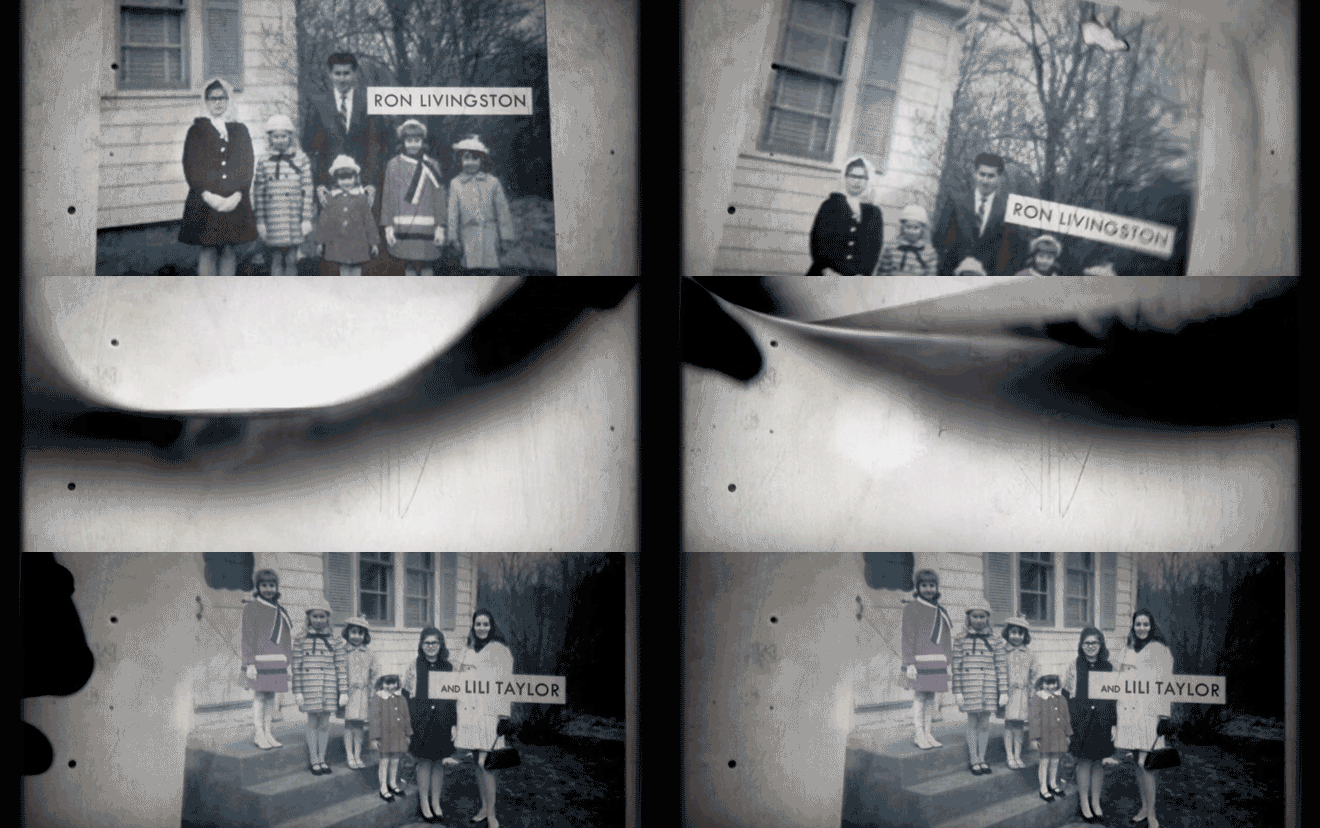
MICRO ANALYSIS
CAMERA
The camera does not move at all in this title sequence. It stays in a close up position, looking down on to the pictures and newspaper articles. This gives the impression of a point of view shot, implying that we are watching what is happening through this unseen person's eyes. In my opinion, this adds to the tense feeling of the title sequence because it makes the audience question why they are seeing this, and who it is studying these photos as we never actually see the person.
EDITING
The overall pace of this title sequence is quite slow. The audience is shown each picture/article for at least six seconds, giving them enough time to understand what they are seeing so the storyline of the film is more clear. The slow pace also adds to the scared/tense feeling the audience may have as you do not know what is going to happen next, and prolonging each shot increases tension.

Between shots, both fades and cuts are used. Cuts are used when something quick and frightening pops up. For example, a picture of a creepy doll is cut to and from very quickly, accompanied by a loud screeching sound. This jump-scare us used to frighten the audience and put them on edge.

MISE-EN-SCENE
Throughout the title sequence, there are no bright colours, only black, white and grey. This firstly implies that the film will be set in the past. It also implies that there will be no happiness/brightness in the film,reinforcing the fear that the audience will be feeling.
There are also creepy props included in the title sequence, including the doll as shown above. Dolls like this are usually associated with hauntings and horror, which is why it would have been used. Along with this doll, there are newspaper clippings with various headlines, for example:

These articles may have been used to give the audience an idea of what the film is about and the storyline. However, these articles also suggest that someone is collecting them, which creates a sense of mystery.
SOUND
Throughout the title sequence, there is a deep drone sound in minor key. This particular sound makes the audience feel like something is not quite right, making them anxious. There is also synchronous high-pitched noises that accompany images that quickly flash on to the screen. This sound is used to frighten the audience as it is so sudden and contrasting the deep noises in the background. There are also quiet wind sound effects used in the background, which has implications of loneliness and isolation, something the audience may find scary.
MACRO ANALYSIS
KEY PLOT
In this title sequence, a key plot is not really introduced. However, through the newspaper articles, many smaller story lines about hauntings, murder and generally evil topics are shown which may link to the overall key plot. It is unsure whether these smaller story lines are introduced chronologically as they are not directly linked.
CHARACTERS
You are not shown any of the main characters in the title sequence, however, we can see someone's hands moving the pictures. It is unclear whether they are actually a main character though.
ORDER OF TITLE CREDITS
- Director (James Wan)
- Writers (Chad Hayes, Carey W. Hayes)
- Producers (Peter Safran, Rob Cowan)
- Executive Producers (Walter Hamada, Dave Neaustadter)
- Director of Photography (John R. Leonetti)
- Production designer (Julie Berghoff)
- Editor (Kirk Morri)
- Main actors (Patrick Wilson, Vera Farmiga, Ron Livingston and Lili Taylor)
- Other actors
- Casting by (Anne McCarthy, Kellie Gessel)
- Costume Designer (Kristin M.Burke)
- Music by (Joseph Bisharra)
- Distribution company (New Line Cinema)
- Production companies (Safran Company, Evergreen Media Group)
- Producer (James Wan)
- Title (The Conjuring)
SECOND TITLE SEQUENCE:
THE STEPFATHER

No comments:
Post a Comment