Saturday, 3 October 2015

Task 8: Analysing a Favourite Film's Title Sequence

Back to the Future (1985)


The opening credits for this film uses titles over moving images. There is no music and barely any words, simply the sound of clocks and a news anchor on TV as we are taken around a main character,'s house. Through doing this we are told a lot about him. For example, the large amount of clocks hints at his interest in time travel, and the news reader/lost plutonium in his house tells us that he is slightly misbehaved yet interested in science. We also see many different gadgets, suggesting that this film's genre is sci-fi.

Order of the title credits:

  • Possessor credits
 
  • Film's title

  • Starring 
  • Casting by 

  • Original score performed by 

  • Music by

  • Editors

  • Production designer

  • Director of photography

  • Executive producers

  • Writers

  • Producers

  • Director

Friday, 2 October 2015

Task 7: A Conclusion on Titles in Title Sequences

The typical order in which we see the title credits:

  • Name of the studio
  • Name of the production company
  • Possessory  Credits (a film by...)
  • Starring
  • Film's title
  • Featured actors
  • Casting/casting by
  • Music/composer
  • Production designer
  • Editor
  • Director of photography
  • Producer/executive producer
  • Writer/screenplay by
  • Director
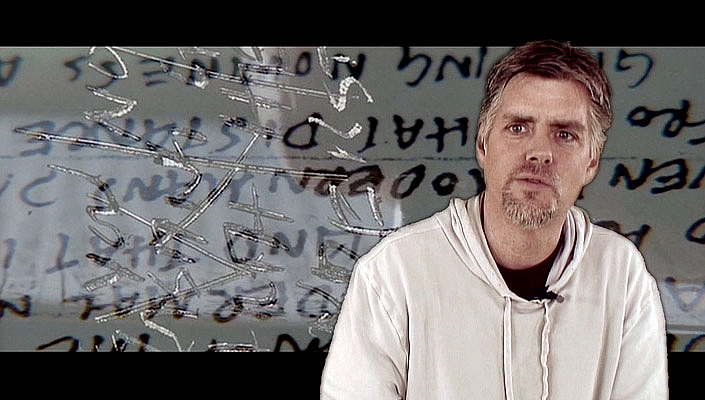
From the opening sequences that I have looked at, I can see that most are around 3-5 minutes. It varies from film to film but they usually are not any shorter because there are so many people to credit. The font size also varies. Usually if there is not much else to look at, the font will be larger and the focus. If there are other things going on e.g. animations or dialogue, the credits will be smaller and less noticeable, or in some cases, integrated with the animation/moving image. Again, the font style can vary from film to film but usually, it is quite plain. This is probably because the title designer may want you to focus on the other things going on. However, in some opening sequences, the font fits in with the film's genre or narrative. For example, in the film Seven, Kyle Cooper used a handwriting font because in the film, the character writes a lot in a journal.

Task 6: Analysing Two Film Title Sequences


The title sequence for this film uses animation. They have used things such as bicycles, clocks and hot air balloons, objects that will later be in the film. The animations also give the audience a sense of adventure as we see things from different countries e.g. the bull which we would associate with Spain. Therefore we can assume that this is an adventure fiction film. The colours used include red, yellow and blue, all of which are bright colours. This tells us that this film will be light-hearted. This is supported by the happy-sounding orchestral music played in a major key as it makes you feel like something good is going to happen, it relaxes you. A horror or thriller film would want to do the exact opposite.

The actual title credits are integrated into the animation. For example, animated faces on the hot air balloon have title credits put next to them. We are not introduced to any characters straight away, but again there are hints about the storyline being adventure-based due to the animations.


This type of title sequence is titles over moving images. A birds eye view of the town in which "Beetlejuice" is set is shown, introducing us to the location. The orchestral music used in this title sequence is played in a minor key at a fast pace, which gives us an anxious feeling. This implies that a part of this film's genre is horror. Title credits flash up in a large font, making them really stand out.


No obvious storyline or plot is set up, however, throughout the title sequence, the camera is constantly moving through the town until  the end when it focuses on a house. Therefore, we can assume that the film's plot will have something to do with this house. Apart from this, we do not meet any characters and therefore cannot understand much about the storyline.

Task 4: How Can A Film Opening Attract An Audience

  Answers Based On The Documentary "Watching"

1)What does Thomas Sutcliffe mean when he says "Films need to seduce their audience into long term commitment. While there are many types of seduction, the temptation to go for instant arousal is almost irresistible".

Thomas means that you have to hook your audience at the very start. Some directors fall into the temptation of using cliff-hangers and dramatic title sequences to intrigue their audience, because they make the audience want to find out what will happen next.


2) According to director Jean Jacques Beineix, what are the risks of 'instant arousal'?
The risk is setting the bar too high. If the opening shows all the best/ most dramatic parts then there is little to show in the rest of the film. The audience will have higher expectations of the rest of the movie, and it's hard to deliver and live up to those expectations. You also face the risk of speeding through the plot too quickly.


3) Explain why “a good beginning must make the audience feel that it doesn’t know nearly enough yet, and at the same time make sure that it doesn’t know too little”
This is so, because it forms a sort of contract with the audience. Giving them little snippets of information makes them invested in the film. A good opening sequences has to capture the attention of the audience and make them want to stay until the end, but maintain the main plot points a mystery or else what’s the point. The titles also indicate the tone of the movie and can get the audience onto your ‘wave length’ (way of thinking).


4) What does critic Stanley Kauffman describe as the classic opening? Why?
1) Wide shot of the city

2) A shot of a big building

3) A close up of a window

4) camera moves inside the room (100m )

5) The camera moves from the window to a door

6) The camera goes through the door and introduces the main character this is very simple but a very effective way of establishing the setting and introducing the audience to the main character(s) of the movie.


5) Why is Kyle Cooper’s title sequence to the film seven so effective?
Seven’s title sequence is very effective because, at the time, it was something new and refreshing. It fells like you’re watching part of the actual movie. It also manages to convey the genera and tone of the film. It introduces the audience to the addictive behaviour of the character, and allows the audience to prepare of what is to come.


6) What did Orson Welles want to achieve with his opening to the film ‘A Touch Of Evil’? What did Universal Studios do to it? Why?
Welles wanted to not have the title sequence. He wanted to jump straight into the movie. He believed not having a title sequences would build up the atmosphere and not give the audience any time to prepare. Universal Studios didn’t agree with his decision and after a massive court argument, they added a title sequence at the start. Universal thought it was unusual and added to credits at the end, and all together an inconvenience, and didn’t see the creative element of it.


7) What is meant by “a favourite trick of film Noir”? What is the trick?
The trick is showing the ending of the film at the start, and then working backwards to inform the audience how the characters arrived at that conclusion. It works really well because it’s human natural to want to know why things are the way they are.


8) How does the opening to the film ‘The Shining’ create suspense?

The shining creates suspense by using a high camera shot that looks like a predator is following the car, ready to attack its prey. It also cleverly uses lighting to indicate that the car is driving the wrong way. It got gradually darker as the car got closer to its destination. The dark and eerie music helped set the dark and mysterious tone.

Task 5: What Makes a Good Title Sequence According to Kyle Cooper?


When talking about his experience in being a title designer, Kyle Cooper talks about what he believes makes a good title sequence. According to him, a good title sequence:

  • Sets an expectation for the movie
The title sequence of a movie really sets the tone. It allows the audience to make preconceptions of what the movie will be like and where the storyline may go.
  • Gets the audience excited to watch the film
If a title sequence is completely boring, the audience will not give the rest of the movie a chance. Title sequences need to grab the audiences attention so their minds do not wander.
  • Uses the typeface to add to the overall impression of the film
The typeface used in a title sequence has to link to the genre of the film or somehow relate to the story. For example, Kyle Cooper says he used a handwriting typeface in the film "Seven" as it linked to the obsessive nature of one of the characters who would write loads of things down. Also, if you are about to watch a horror film, seeing fancy or curly writing would be unfitting, it needs to relate and add to the tone of the film. For example, The Conjuring:


In this title sequence,the typeface is small and minimal so it does not take away from the image shown on screen behind it.

  • Reminds people what the potentialities are in a particular field. Makes them want to get a job being a title designer.
When a title sequence is very interesting or particularly intriguing, people may be inspired to do something similar.

Thursday, 1 October 2015

Task 4: How Can a Film Opening Attract an Audience?

In response to the documentary "Watching".

1) Thomas Sutcliffe said: "Films need to seduce their audience into long term commitment. While there are many types of seduction, the temptation to go for instant arousal is almost irresistible." By this he meant that you need to grab the audience's attention as soon as possible in order to get them to enjoy the film immediately and stay watching. You have got to intrigue them by doing something big and exciting.

2) According to director Jean Jacques Beineix, there are risks when it comes to "instant arousal".After you do something big and exciting, what do you do next to keep up the standard? You should take your time, otherwise the bar is set too high too soon. Also, from the first big moment, people will be asking questions that you need to answer throughout the film, it's easier to introduce the audience to the story slowly in order to not confuse them.

3) It was said, "A good beginning must make the audience feel that it doesn't know nearly enough yet, and at the same time make sure that it doesn't know too little". This means that you have to catch the audiences attention without ruining the rest of the film. You have to allow the audience to make their initial judgements before you bombard them with information.

4) Critic, Stanley Kauffmann describes the classing opening in a series of steps:
  • Shot of a big building
  • Shot of a window
  • Into a room
  • Through a door
  • Into the room where we meet the main character
According to him, this is used because it is simple. You are introduced to the setting, characters and location, everything is in place.

5) Kyle Cooper's title sequence to the film Seven is so effective because it tells the story through foreshadowing. At certain moments, the audience is shown things that are relevant to the storyline. You will only understand what happened in the title sequence once you have finished watching the film. It also has a psychotic energy which sets the tone for the rest of the film.

6) For the opening sequence to A Touch of Evil, Orson Welles wanted to take the audience straight into the world of the film. However, Universal Studios put music and credits over it which created a barrier between the audience and the film. 

7) A favourite trick of film noir is when the film starts with the end and then continues from the beginning, so you already know what is going to happen.

8) The opening to the film The Shining creates a feeling of suspense. There is a helicopter shot which is pursuing the car as if it were chasing it, implying that the people in the car were under threat. The car is also driving into the darkness, making the audience feel like they are driving the "wrong way". In turn this creates a sinister feeling which really sets the tone for the film.


Task 3: The Purpose of Film Openings

For this task, I have created a slide on SlideShare which explores the purpose of title sequences and film openings.